
Frank Leslie’s Illustrated Newspaper ~ 06 February 1864
Transcription from article

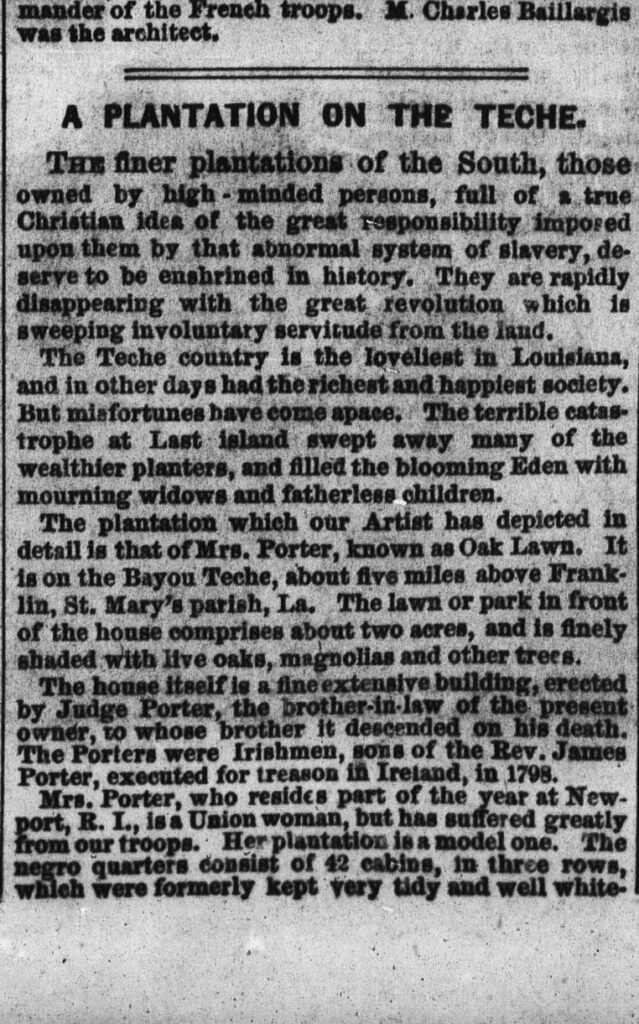
A PLANTATION ON THE TECHE.

The finer plantations of the South, those owned by high - minded persons, full of a true Christian idea of the great responsibility imposed upon them by that abnormal system of slavery, deserve to be enshrined in history. They are rapidly disappearing with the great revolution which is sweeping involuntary servitude from the land.

The Teche country is the loveliest in Louisiana, and in other days had the richest and happiest society. But misfortunes have come apace. The terrible catastrophe at Last island swept away many of the wealthier planters, and filled the blooming Eden with mourning widows and fatherless children.

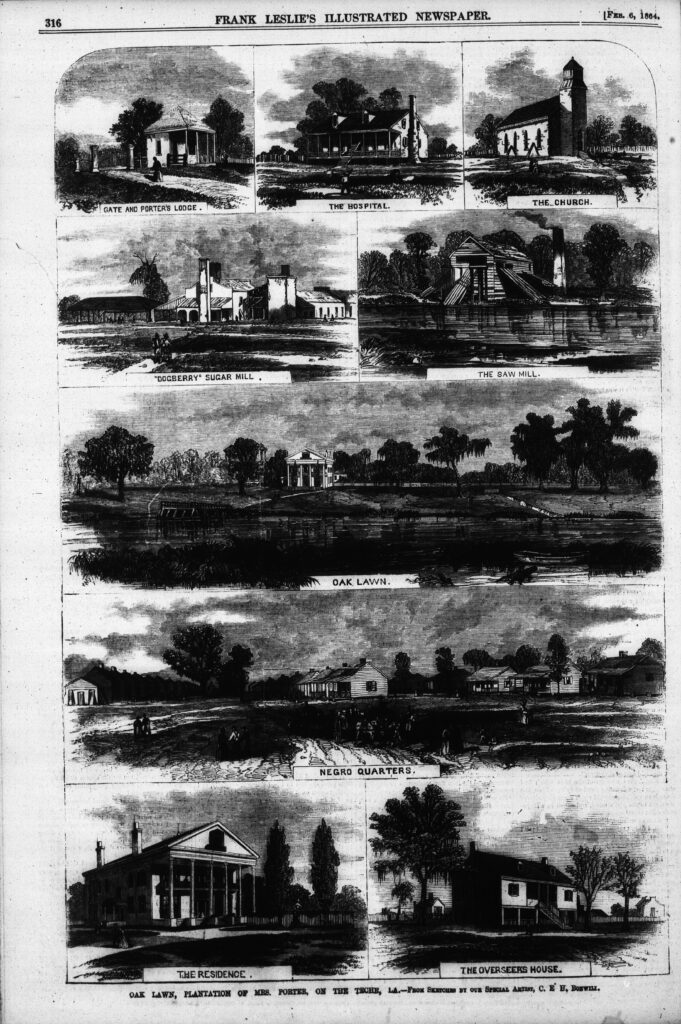
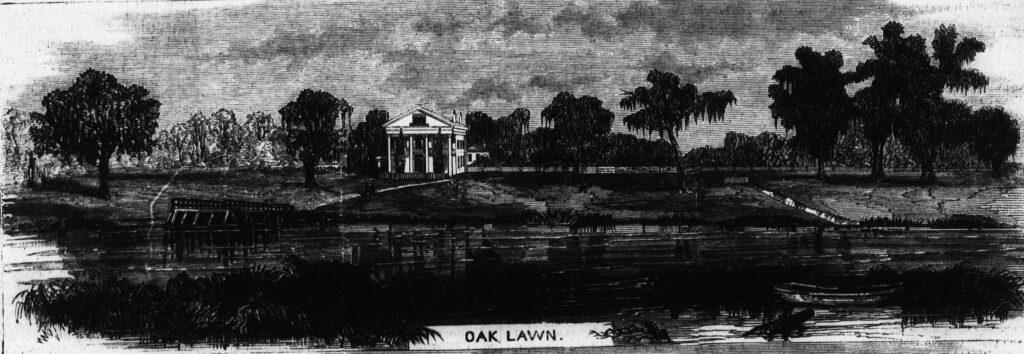
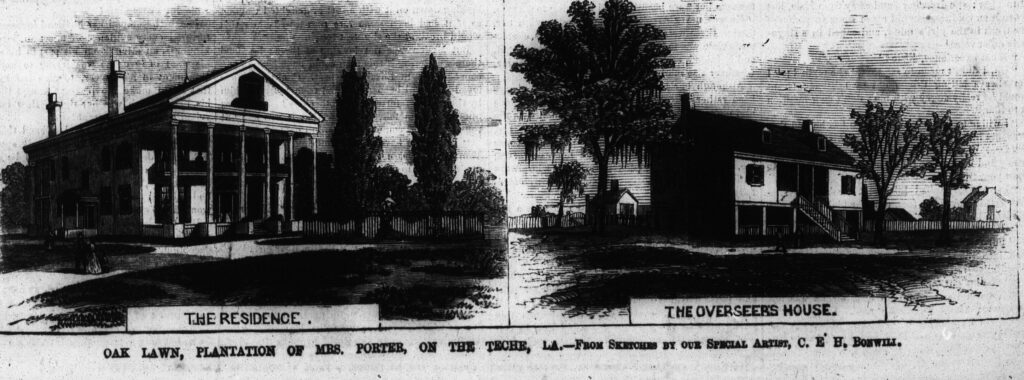
The plantation which our Artist has depicted in detail is that of Mrs. Porter, known as Oak Lawn . It is on the Bayou Teche, about five miles above Franklin, St. Mary's parish, La. The lawn or park in front of the house comprises about two acres, and is finely shaded with live oaks , magnolias and other trees.

The house itself is a fine extensive building, erected by Judge Porter, the brother-in-law of the present owner, to whose brother it descended on his death. The Porters were Irishmen, sons of the Rev. James Porter, executed for treason in Ireland, in 1798.

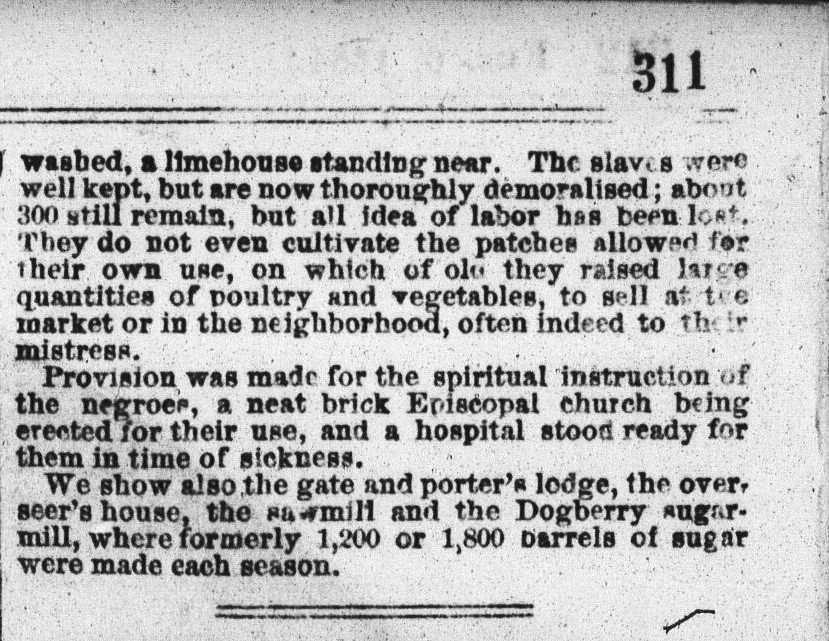
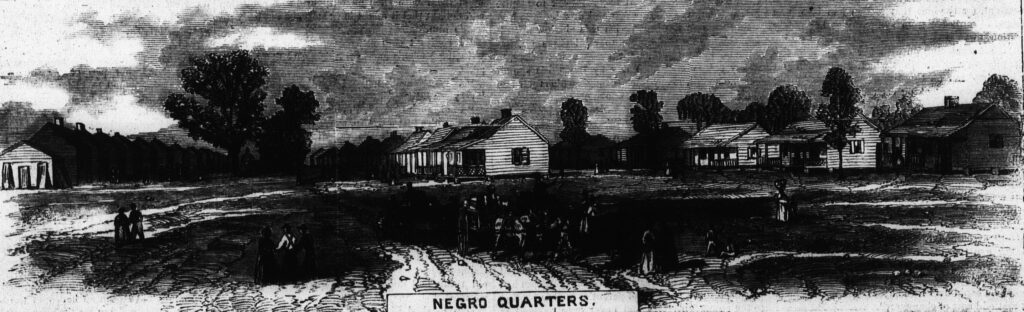
Mrs. Porter, who resides part of the year at Newport, R. I., is a Union woman, but has suffered greatly from our troops. Her plantation is a model one. The negro quarters consist of 42 cabins, in three rows, which were formerly kept very tidy and well whitewashed, a lime house standing near. The slaves were well kept, but are now thoroughly demoralised; about 300 still remain, but all idea of labor has been lost. They do not even cultivate the patches allowed for their own use, on which of old they raised large quantities of poultry and vegetables, to sell at the market or in the neighborhood, often indeed to their mistress.

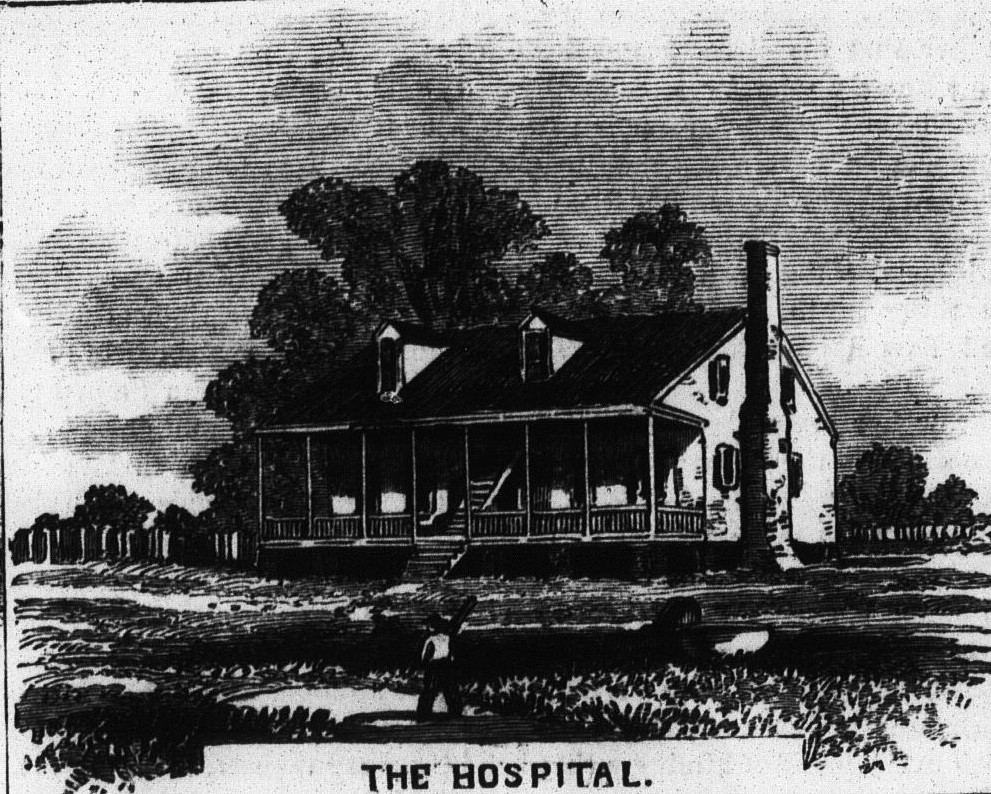
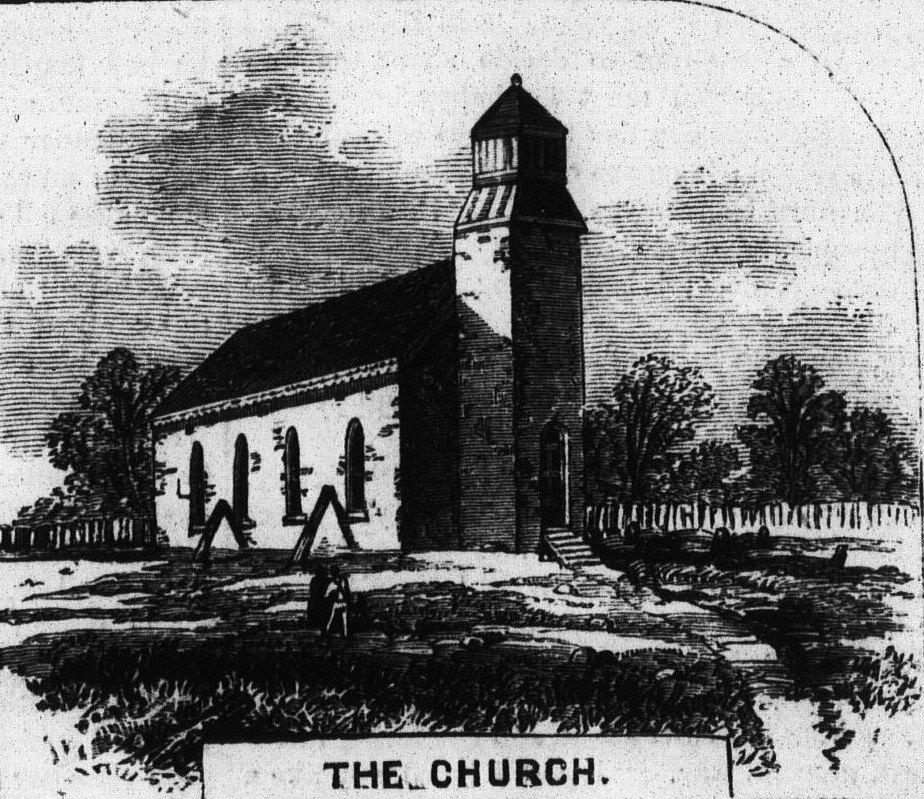
Provision was made for the spiritual instruction of the negroes, a neat brick Episcopal church being erected for their use, and a hospital stood ready for them in time of sickness.

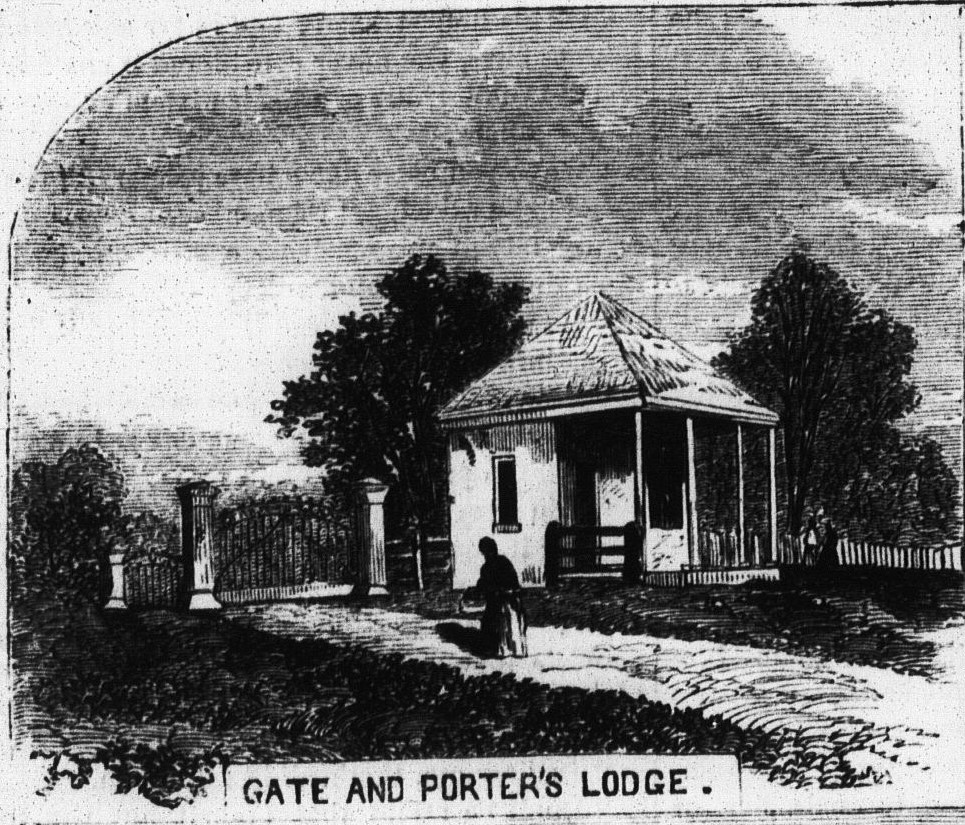
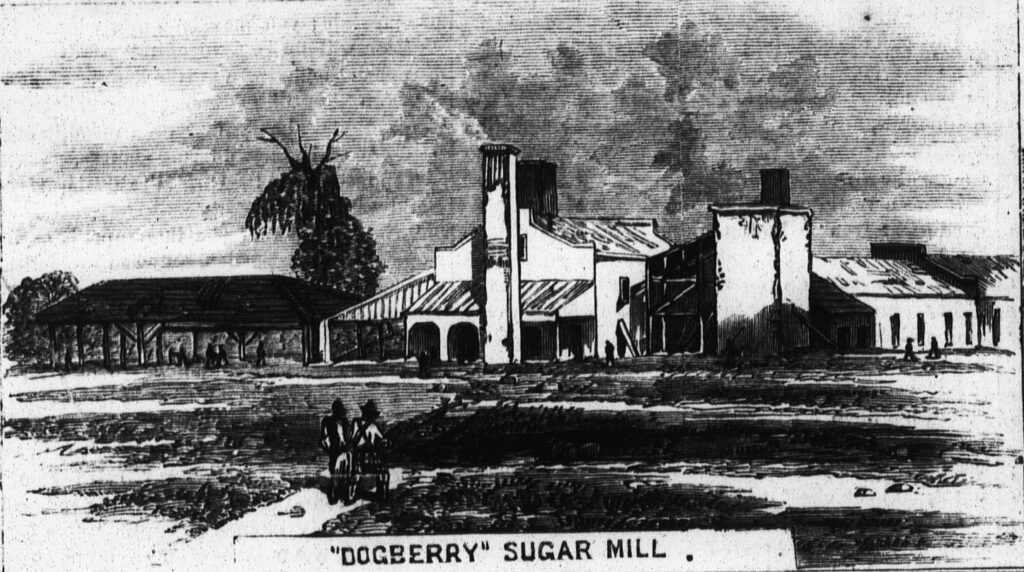
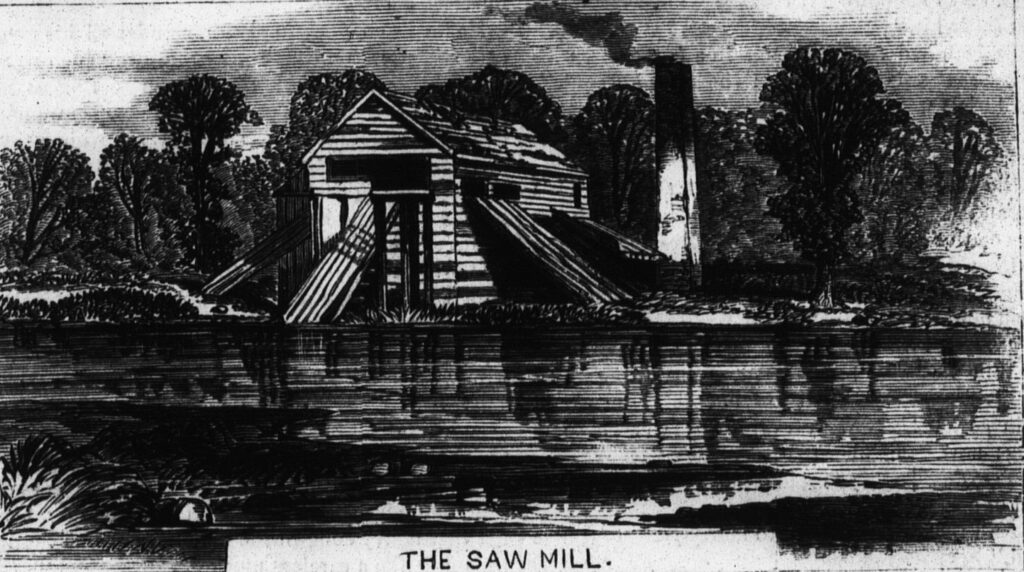
We show also the gate and porter's lodge, the over, seer's house, the sawmill and the Dogberry sugar mill, where formerly 1,200 or 1,800 barrels of sugar were made each season.
~ Click on Images to Enlarge ~

Reference:
Lesile, Frank. “A Plantation on the Teche.” Frank Leslie’s Illustrated Newspaper. February 6, 1864.
